
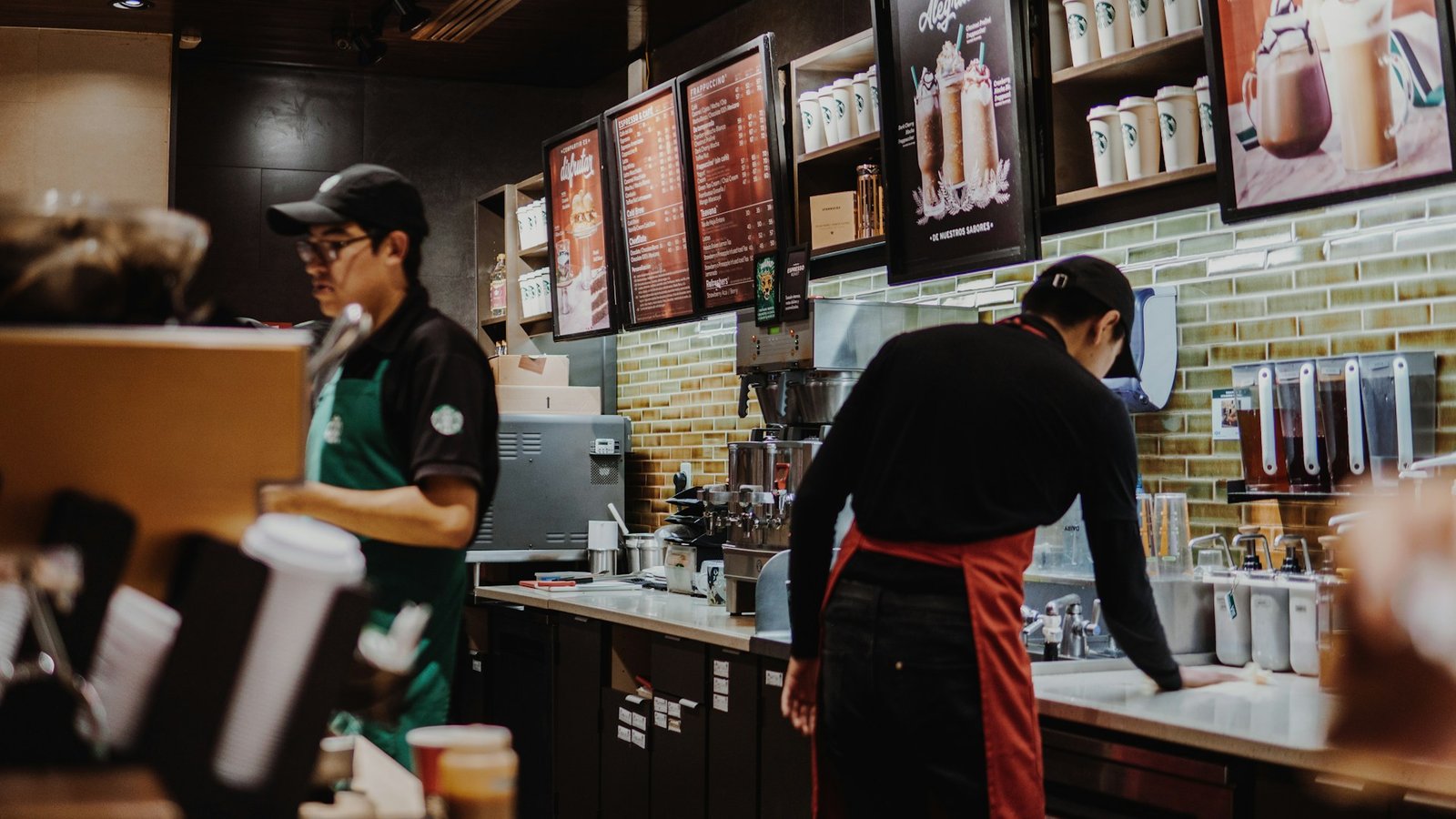
When one says ‘Let’s grab a cup of coffee.’ The first place that comes to mind is Starbucks. The magic of aroma that started spreading in 1971 has now spread around the world. A coffeehouse business that started with one store on Pike Place Street is now worth billions of dollars. But the question is, who made it worthwhile? Is it the one who started it, the partners who are working for it or the customers who have been loyal for ages?
Customers and partners
Most of you would agree with the customers, as they drive sales. No business is a business without its customers. But as someone who has been with the company for over five years, I would state it’s not just the customers but the partners. ” Partner” is the term we use at Starbucks for our coworkers. It’s a term that promotes equality and makes them feel indifferent, irrespective of their background. Both partners and customers shape the Starbucks coffeehouse experience.
Service changes behind the scenes
When customers notice one change in the service, e.g., we took away the condiment stand during the pandemic but re-introduced it a year ago. On the back end, we get to learn 5 changes, minimum, with a fancy term. I must mention that each change comes with a bunch of training as well. As fellow readers, you must be thinking, ” Why five?
In the following case, at first, the condiment was supposed to have all the lids, cream, and sugar. Later on, we were advised to put just hot lids. Maybe that wasn’t enough, so they took the lids away. Furthermore, they made a rule that a customer must ask you for one while you are (barista) handing off the drink
Customer and seller perspective
Now, there are two different perspectives to consider. Firstly, the consumer mindset is someone who sees Starbucks as a fast-paced beverage industry. They are likely to grab a coffee and go at 8 in the morning to reach their office on time, avoiding traffic. And also someone who is making countless efforts to save the environment by not using that one lid. I hate to admit that there are more former customers than the latter ones. Secondly, the seller’s mindset, including the entire staff behind the bar. As someone who has worked in one of the top 50 Starbucks stores in North America, I provide fast, excellent service, as each second counts while handcrafting a beverage. It was mind-baffling.
The impact on experience
As a result, the store’s connection score dropped by 5% (87%), and our average wait time during peak increased by 30 seconds. This not only made the environment chaotic and full of complaints, but also killed the coffeehouse experience. Each store in the whole district was going through it, and social media was questioning it: ‘Why are they doing it?’
Team response and improvement
As a coffeehouse leader, one must not say no to a customer while also training and resolving conflicts between a partner and a customer. My team and I adopted a new policy. We began asking people whether they prefer a lid while handcrafting their beverage, which not only reduces wait time but also allows us to connect with them and create a welcoming atmosphere. The result was reflected in numbers and behaviour.
“People will forget what you said. They will forget what you did. But they will never forget how you made them feel.” — Maya Angelou
As a customer walks in on a hot summer day, sweating and feeling thirsty, they first feel the cool air from the AC, which calms them. This is followed by a warm greeting with a big smile: ‘Hello Marcus, how are you?’ Starbucks is about that coffee experience, not just about selling a grande latte, but a service that starts from the moment a customer walks in until they leave. Saying their name gives them a sense of belonging, a recognition that human beings desire.
Conclusion
If I put it differently, imagine 5 partners are trying to foster a deep connection with you every day, countless times you walk into your neighbourhood Starbucks. If that would make you smile and prompt you to say thanks, then my team is on the right track, fostering a welcoming coffeehouse, as we measure growth with a smile and thanks.